Collaborative Oncology Navigation Key to Tackling Racial Gap in Breast Cancer Survival

AONN+ Blog published on October 11, 2021 in Breast Cancer, Barriers to Care, Research

Yale University researchers say a community-based, collaborative oncology navigation approach is needed to address barriers to cancer care among underserved ethnic minorities and populations.

Why Minority Women Are at Higher Risk for Breast Cancer

Research studies have shown that underserved ethnic minority women face a myriad of adverse social barriers to care access, resources, and optimal treatment, resulting in a higher risk of breast cancer.
 
Related Items
Hard-to-Reach ABC/mBC Communities Toolkit
Navigation Tools published on November 22, 2024 in Breast Cancer
To address the critical unmet need in access to care for hard-to-reach populations with advanced/metastatic breast cancer (ABC/MBC), the ABC Global Alliance and Pfizer have collaborated to develop a toolkit of relevant, community-based initiatives and best practice summary documents that aims to drive collaboration across the global ABC/MBC community.
Satisfying Curiosity Through Research—One Navigator’s Story
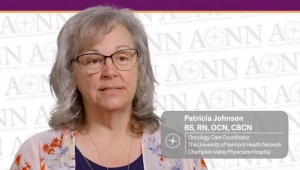
Patricia Johnson, BS, RN, OCN, CBCN
Video Library published on December 19, 2023 in Research
Patricia Johnson, BS, RN, OCN, CBCN, had a question about retention and distress of breast cancer patients within her practice, but had never conducted research. However, through the support of her mentor, Local Navigator Network, and other AONN+ resources, she has found the answers she sought and, in the process, discovered the tremendous satisfaction that comes from sharing knowledge to impact patient care.
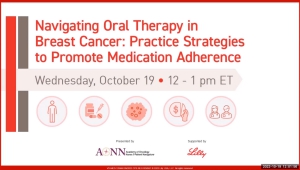
Navigating Oral Therapy in Breast Cancer: Practice Strategies to Promote Medication Adherence
Robert J. Ferguson, PhD, Madelaine C. Kuiper, NP, Maryam Lustberg, MD, MPH
Video Library published on November 9, 2022 in Breast Cancer
The Academy of Oncology Nurse & Patient Navigators (AONN+) and Eli Lilly and Company Medical Affairs are pleased to present a live webinar designed to facilitate conversations with patients regarding adherence to breast cancer treatments. Attendees will have an opportunity to participate in a live Q&A following the presentation.